

If you have explored my Blood Sugar Friendly Recipes, you've probably seen me mention CGMs (Continuous Glucose Monitors).
Maybe you're wondering what exactly that means, or why someone without diabetes would wear one. I started wearing a CGM in 2024 to address severe hormonal and inflammation symptoms, and it completely transformed my health. I've unlocked better sleep, eliminated joint pain and inflammation, my mood has stabilized and (at risk of sounding like an infomercial) I lost 15lbs.
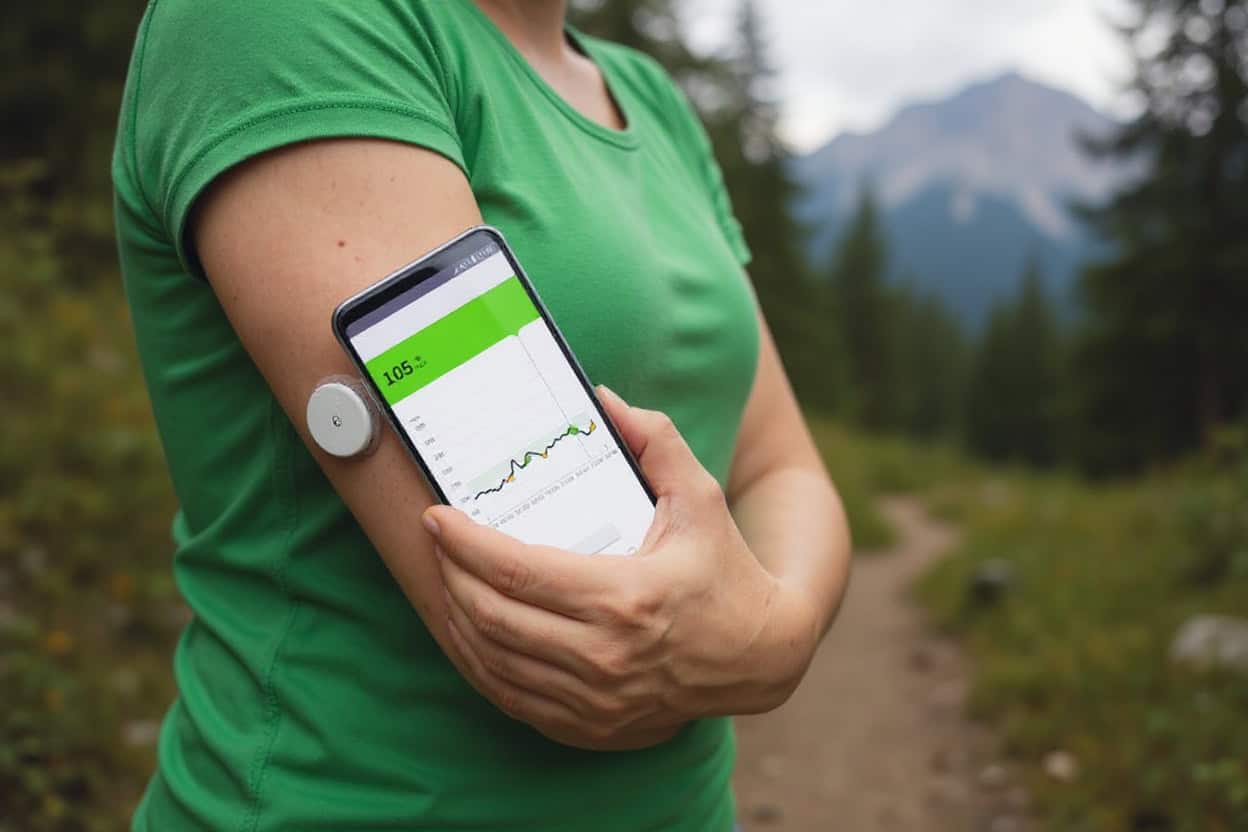
It was also a CGM that revealed my husband was pre-diabetic and provided new insights for how he could take better care of himself through food choices.
These little devices have opened up opportunities for better health for both of us, but they come with a learning curve. So, let's talk about 'em!
Why I Started Wearing a CGM
In 2024, I was struggling with what seemed like early perimenopause:
- Regular insomnia - not sleeping through the night
- Intense daytime fatigue made basic tasks difficult (that "I hit a wall" feeling)
- Mood swings that were affecting my relationships (sorry Ryan!)
- Joint pain so severe I had to drop out of half-marathon training
I'd been diagnosed with adenomyosis and endometriosis, and after reading Dr. Mary Claire Haver and Casey Means' work on inflammation and insulin resistance, I realized lots of hormonal issues can be connected to blood sugar dysregulation. I wanted to try diet and lifestyle changes before medication, so I decided based on their recommendations to try a continuous glucose monitor.
What Actually IS a CGM?
A continuous glucose monitor is a small sensor worn on your upper arm that tracks glucose levels 24/7. It doesn't measure blood sugar directly, but measures glucose in your interstitial fluid (the fluid between cells), which mirrors blood glucose with about a 10-15 minute lag.
Key differences from finger prick tests:
- Finger pricks give you a single snapshot
- CGMs show you the whole curve - how glucose rises, how long it stays elevated, how quickly it returns to normal
- The context matters more than any single number
The sensor has a tiny filament under your skin, lasts 10-14 days, and sends continuous readings to your phone.
I was initially freaked out at the idea of a tiny pin going into my skin, but as anyone who's ever worn a CGM will tell you, it doesn't hurt at all.
What Surprised Me Most
I started super strict low-carb, thinking that was the answer. My levels stayed steady, but I was miserable and it wasn't sustainable. That's when I started leaning into what I learned from the book Glucose Revolution. I saw in real time what she taught, that you CAN eat carbs and still maintain steady levels.
Case in point, I've been a fan of oatmeal since I was a kid. According to my CGM:
- Oatmeal with berries alone: moderate spike
- Oatmeal with Greek yogurt and chia seeds: stable response
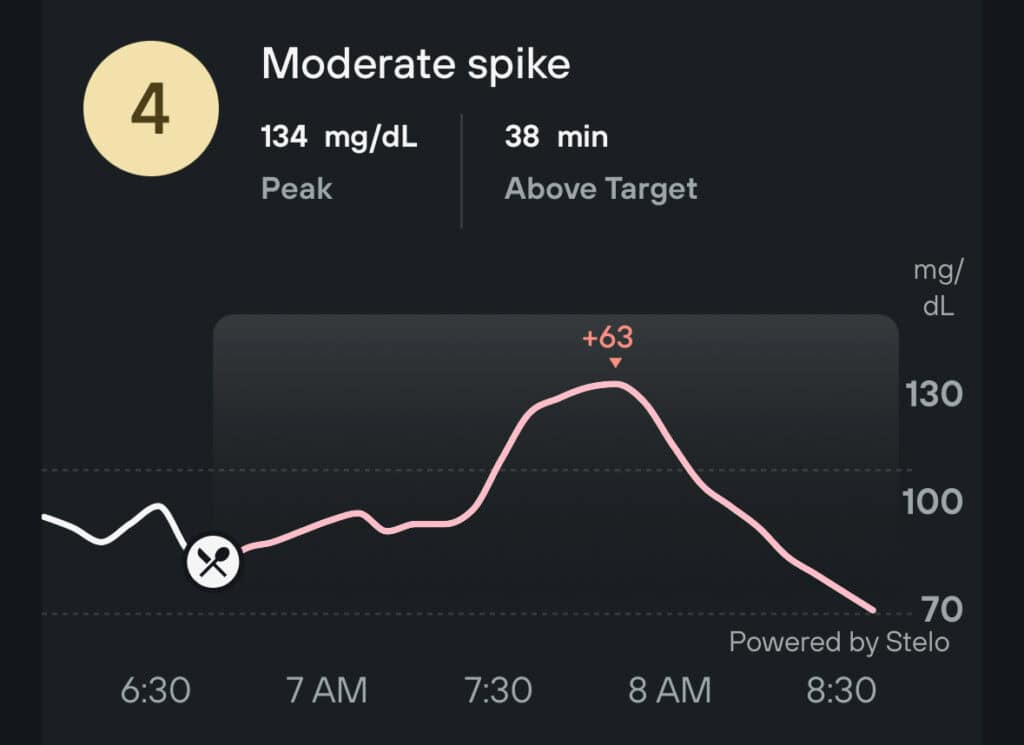
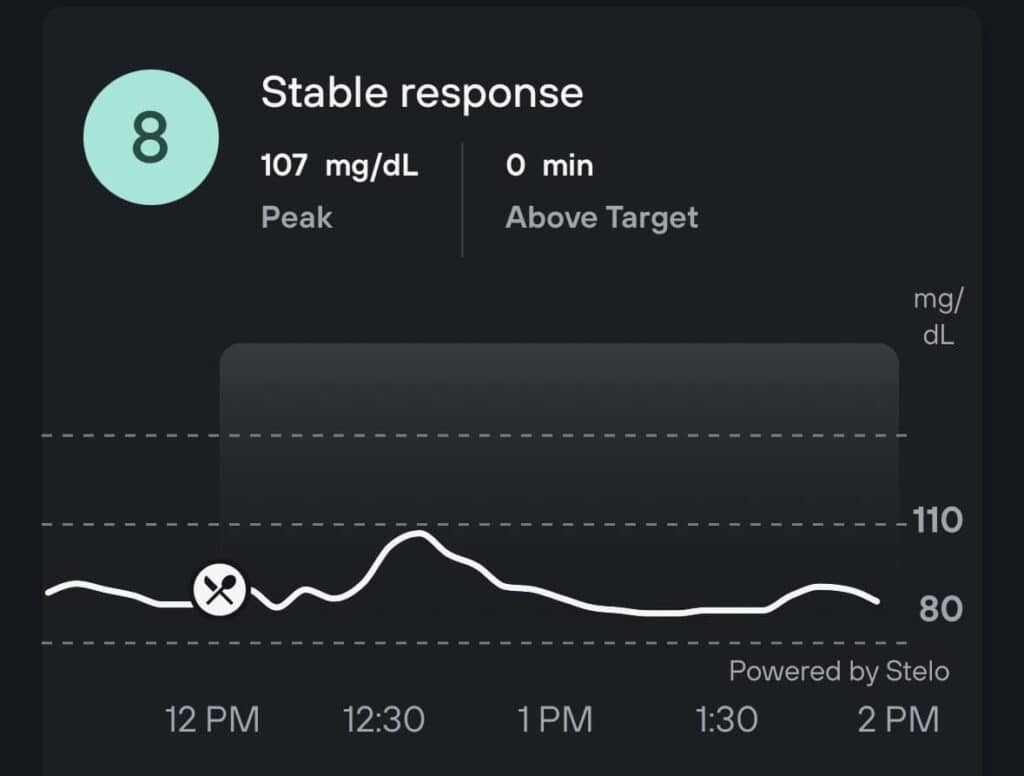
Same base food, completely different response just from adding protein and fat. I talk more in detail about that in my Macronutrients post if you want to dive deeper.
Same thing with cake! At a dinner party I hosted recently, I ate a balanced meal with plenty of protein and vegetables, then enjoyed a serving of my favorite bundt cake at the end. No spike.
Other Patterns I Noticed
- Walking after meals brought levels down faster
- Being sick increased levels even with the same diet
- Stress wreaks havoc on my blood sugar. I had a super stressful work week in January and I was hovering in pre-diabetic territory until the assignment was complete.
- My menstrual cycle caused slightly elevated levels across the board
Within a month of understanding these patterns, all of the symptoms I'd been experiencing started to improve. A year later, my blood work reflected signficant improvements in my A1C (4.8%!), triglycerides and cholesterol numbers. Plus, I feel like myself again.
"I Bet I'm in Great Shape!"
Fast forward to 2025. I had an extra CGM sensor, and Ryan, my very active handyman husband who eats home-cooked meals, decided on a whim to try it. "I bet I'm in great shape!" he said confidently.
Surprise, surprise! His numbers showed pre-diabetes. This despite the fact that he doesn't sit at a desk all day or eat a lot of fast food.
But Type 2 diabetes runs in his family, and genetics were catching up.
Ryan's Simple Tweaks That Worked
Because I'd spent the previous year learning about blood sugar, we knew what to do. Ryan's changes were small but effective:
- Reducing "naked carbs" - if he wants his occasional beer, he generally has protein and fiber first
- Adding avocado to morning toast instead of just butter and jam
- Cottage cheese with banana as a snack instead of just the banana
We not here for a restrictive diet. Just more thoughtful pairing. And his numbers showed marked improvement in just a few weeks.
How to Get and Use One
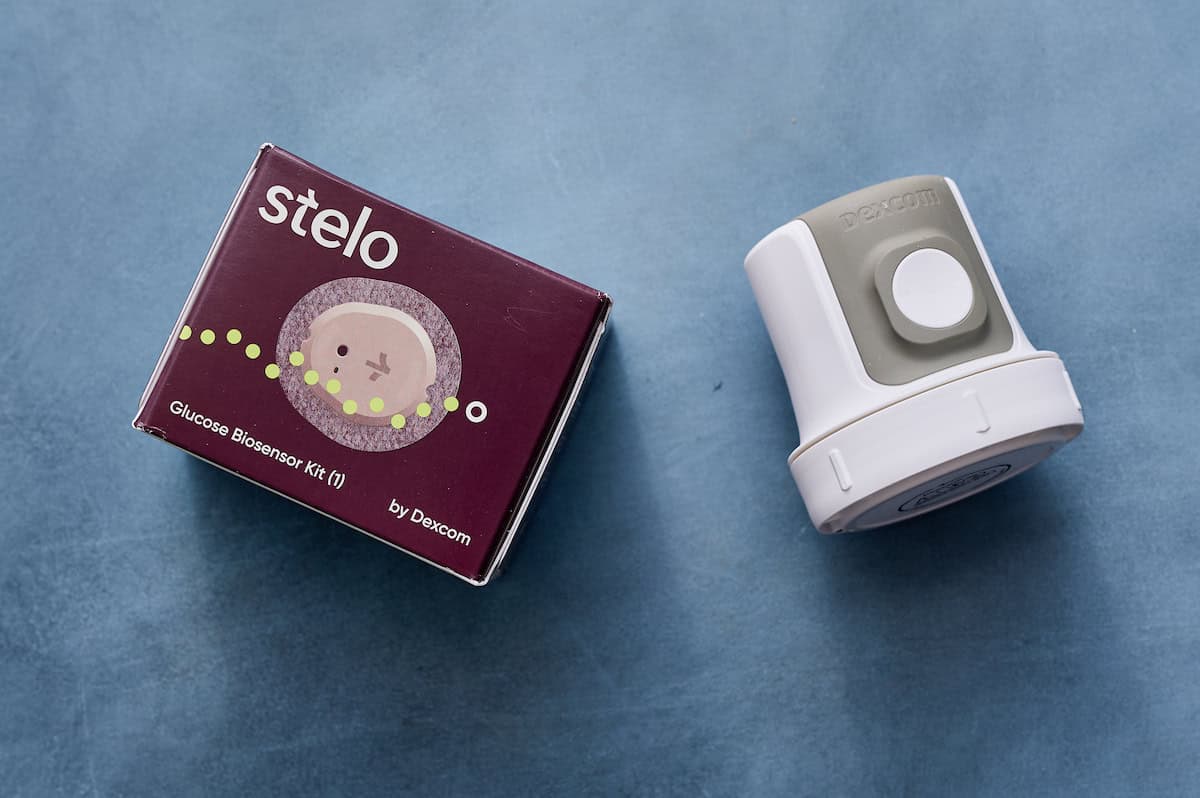
I started with: Dexcom G7 that you can get through the Levels app or by doctor prescription. However, these are the more expensive option if you're paying out of pocket.
I've switched to: Stelo which is over-the-counter intended for use by non-diabetics like myself and it's more affordable in comparison.
I use it with the Levels app for context and easier interpretation. When you see CGM data on my recipe posts, it's typically a screenshot from Levels.
It's a Learning Tool, Not a Life Sentence
As much as I am a fan of CGMs most non-diabetic people don't need to wear a CGM forever.
For people with diabetes, absolutely, it's crucial. But for people like me and Ryan it's helpful data for a short period of time. You wear it for two weeks to a few months and learn:
- How YOUR body specifically responds to different foods
- What meal timing works best for you
- Which foods you can enjoy freely and which need thoughtful pairing
- How stress, sleep, and movement affect your levels
Then you take it off and apply what you learned. You don't need constant data to remember that oatmeal with Greek yogurt works better for you. You don't need a graph to remind you to walk after dinner.
The goal isn't obsession with numbers. It's simply a tool for understanding your body well enough to make informed, intuitive decisions without constant monitoring.

What to Eat When You're Wearing a CGM
And as I shared from my experience, any food can be blood sugar friendly when it's thoughtfully paired.
You don't have to give up cookies, pasta, or sourdough bread (which would break my baker's heart). All of my favorites can be a part of a balanced diet and life.
That said, there are recipes on my site that are blood-sugar no-brainers. They're made to maintain steady levels or accompany higher carb favorites in the interest of balance.
- Salmon Piccata - packed with flavor and omega-3s
- Chia Yogurt Parfait - my go to breakfast for busy mornings
- Broccoli Lentil Salad - keeps you satisfied for hours
- Homemade Flax Seed Crackers - crunchy without the spike
- Dark Chocolate Bark with Dates and Nuts - satisfies sweet cravings mindfully
Browse more ➡️ Blood Sugar Friendly Recipes
Got questions? Leave a comment below! I read every one <3

Sara Pace says
Thanks for the article. My A1c is showing prediabetic, but my finger pricks (testing mostly meals I think would be a problem) seem to be ok. I am thinking of getting a CGM. Any updates on which one you like better.
Joanie Simon says
Glad it was helpful! A CGM is a helpful tool for sure to give a fuller picture of what's going on, spot trends, etc..I've now used the Dexcom G7, Dexcom Stelo and Abbot Lingo. The Stelo and Lingo are both available without a prescription and intended for folks without diabetes. To me, the Stelo and Lingo are both very comparable in terms of accuracy, price and length of use and are very similiar in how you apply them. The only thing that personally pushed me toward Stelo slightly is that it works with the Levels app which is an additional subscription app that analyzes data from the CGM, shares trends with you and evaluates / provides feedback on your meals if you do meal tracking in it. It's more robust in terms of information and education and targeting your personal trends. Because things that don't affect me could affect someone else's blood sugar, so it helps with that individuality component of the equation. That said, it is an additional expense and so if budget is a consideration, not a mandatory thing to do. The Stelo and Lingo apps that come with the CGM are helpful all on their own and will still help you see what's supporting stable blood sugar and where things are causing spikes or crashes. Any other questions, just holler!