

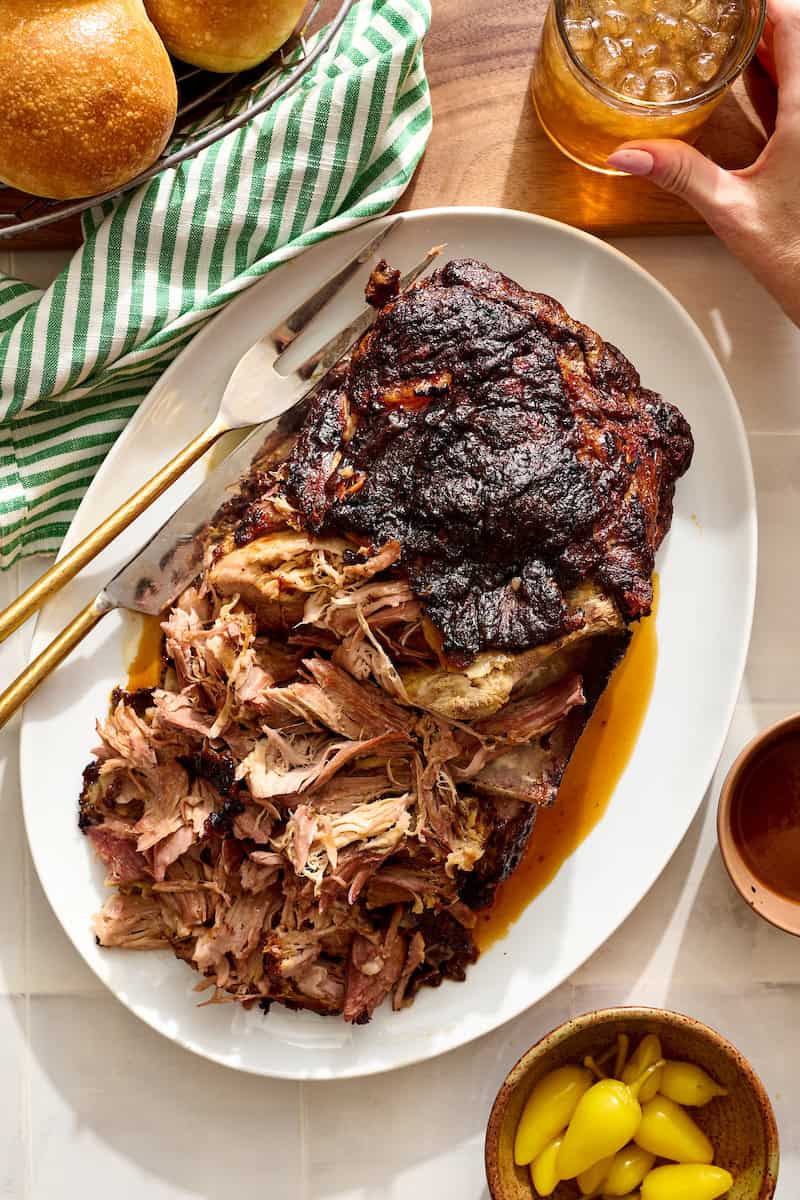
When I perfected this recipe, it felt like a cheat code for entertaining. You set the roast up in the morning, let it go low and slow all day, and you'll be enjoying outsized results come dinner time.
We hosted friends last night and they couldn't stop telling me how much they loved this recipe. And the leftovers are fantastic for tacos, pulled pork sandwiches, or BBQ pork nachos throughout the week.
Quick Look: Oven Roasted Pork Shoulder
⏱️ Prep Time: 10 minutes (plus 2 to 24 hours marinating)
🔥 Cook Time: 6 to 7 hours for an 8-pound bone-in roast
🍽️ Servings: 12 to 14
💪 Protein per serving: 28g
🔪 Cook Method: Oven-roasted
🦴 Bone-In or Boneless: Bone-in is more tender, boneless cooks faster.
🌡️ Cook to Temp, Not Time: Pull at 200°F internal. Cook time varies a lot based on the size and thickness of your roast.
💚 Difficulty: Easy (mostly hands-off)
Click to have AI save and analyze this recipe and provide assistance as you go:
How to Select a Pork Shoulder
For this recipe, you want a pork shoulder roast, also called a Boston butt or pork butt roast. They're all the same cut, just labeled differently depending on the store. (And no, the name has nothing to do with the back end of the pig. It's the upper front shoulder.)
There's also a picnic roast which is sometimes labeled near the pork shoulder section, but it's a different cut from lower on the leg. It has more connective tissue, an awkward shape, and often comes with the skin still attached. It can be roasted, but Boston butt is a much better fit for this recipe.
I love pork shoulder because it's heavily marbled with fat that renders during the long cook, which gives you that fall-apart tender result. A leaner cut like pork loin won't work here. It dries out way before it gets tender.
Bone-in vs boneless: I've made this recipe using both cuts. Bone-in is more tender and has more flavor from the bone. Boneless cooks 30 to 45 minutes faster, so it's great if you don't have as much time. Either way, look for a roast with a thick fat cap on top (don't trim it) and visible marbling throughout. Anywhere from 5 to 9 pounds works for this recipe.
How to Make Slow Roasted Pork Shoulder (Step by Step)
Step 1: Mix the rub
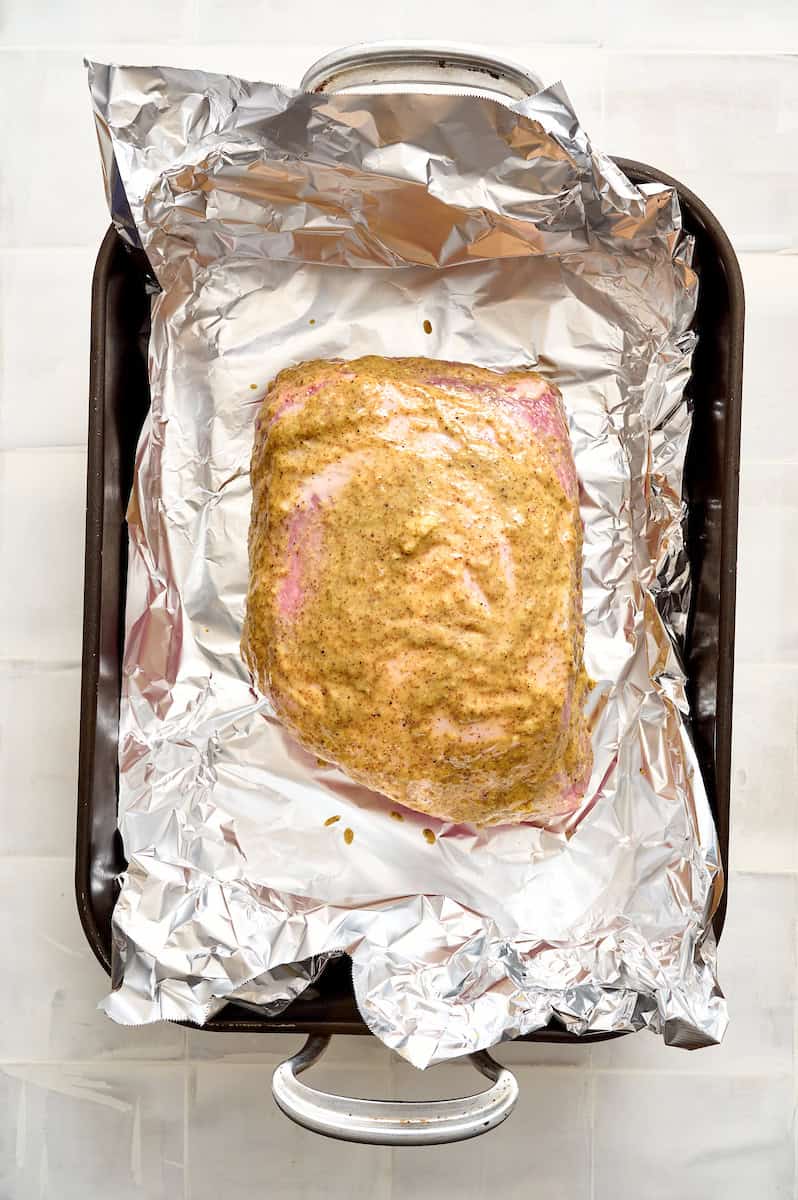
In a small bowl, whisk together the dijon, olive oil, minced garlic, maple syrup, salt, and pepper until you have a thick, spreadable paste.
Step 2: Rub the roast
Pat the pork shoulder dry with paper towels. The rub holds better on a dry surface. Massage the rub all over the roast, working it into every crevice and the fat cap on top. Don't be precious about it. Use your hands and really get it into the meat.
Step 3: Marinate
Cover the pan with plastic wrap and refrigerate for at least 2 hours, or up to 24 hours. Longer is better. Overnight is ideal if you can plan ahead.
Step 4: Bring to room temperature
Pull the roast out of the fridge 30 minutes before cooking. Starting with a cold roast straight from the fridge means uneven cooking. The outside finishes way before the inside catches up.
Step 5: Preheat and roast hot
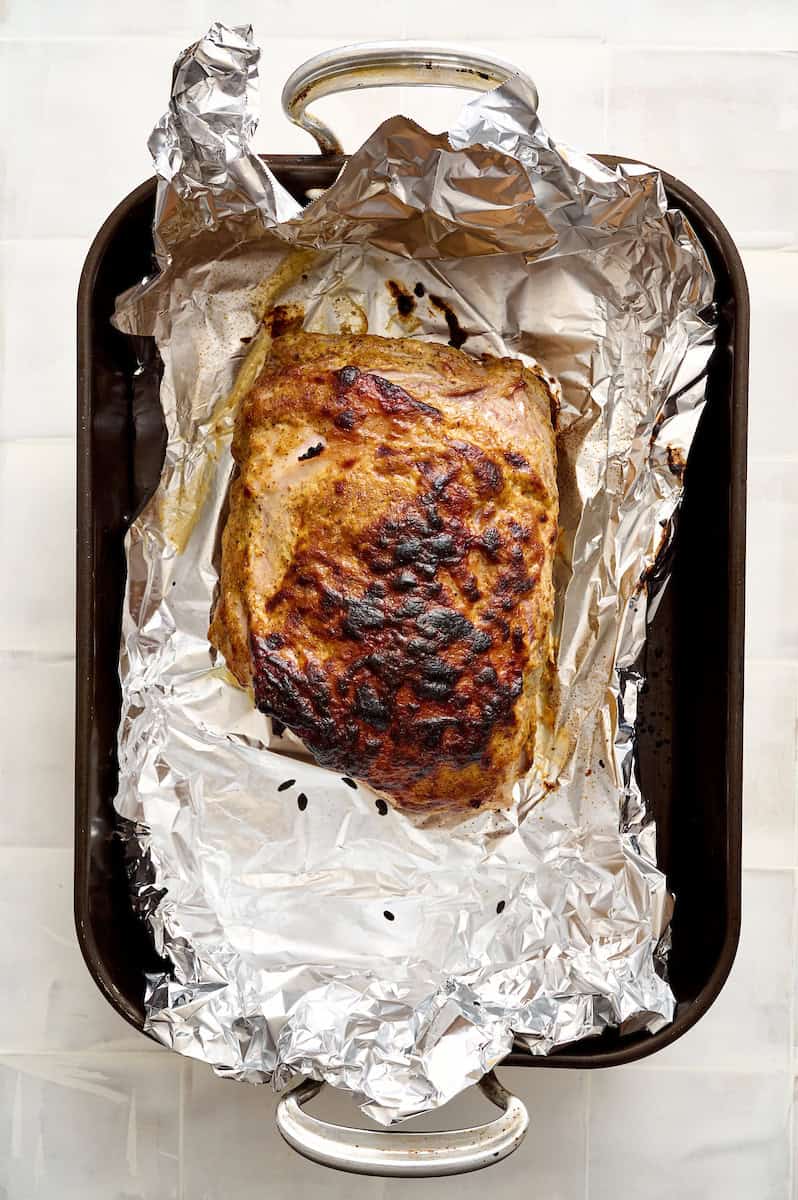
Preheat your oven to 400°F. Place the roast directly in a foil-lined pan, fat cap up, and roast uncovered for 30 minutes. This high-heat start helps to start the nice rich caramelized fat-cap and exterior color on the roast.
Step 6: Drop the heat and go low and slow
After the first 30 minutes, reduce the oven temperature to 250°F.
Time is a rough guide. A thicker roast at the same weight will cook longer than a flatter one. Trust the thermometer.
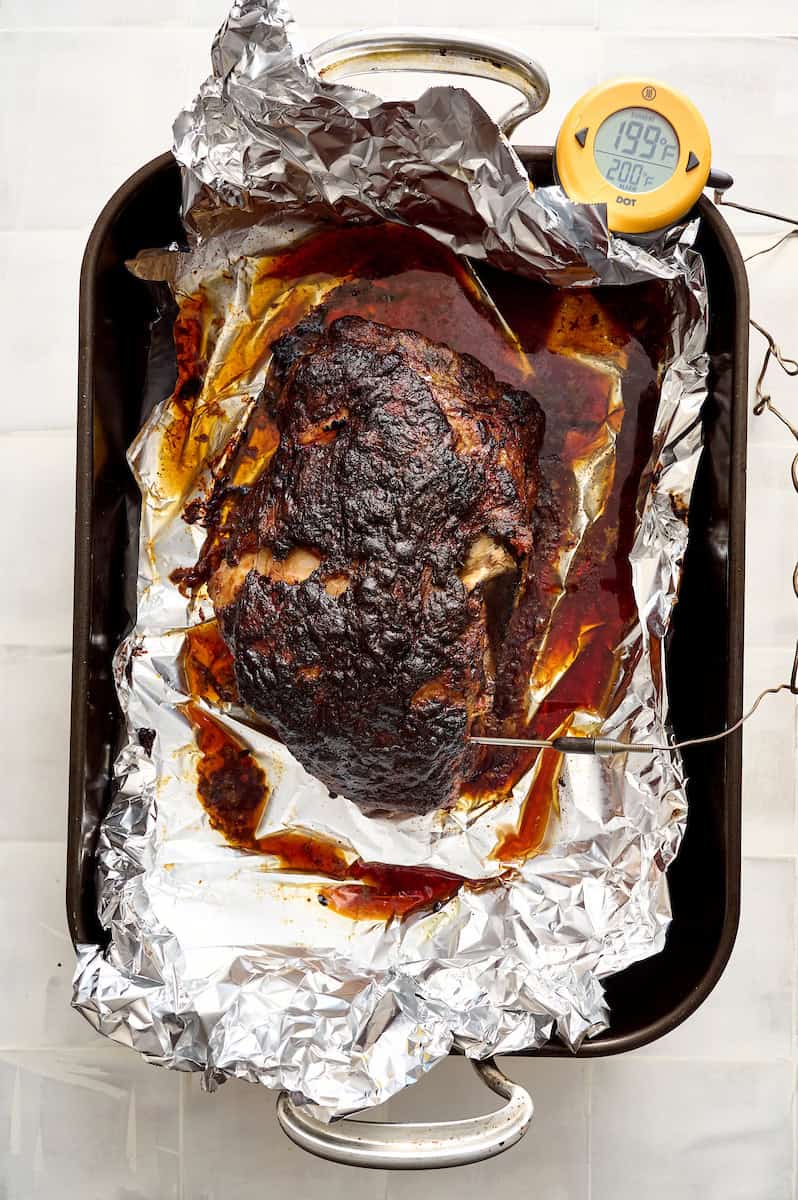
I use an instant read probe thermometer with an alarm set to go off when it hits 200F.
For an 8-pound bone-in Boston butt, plan on 6 to 7 hours total cook time. A 6-pound bone-in will run closer to 5 to 6 hours. Boneless cuts are 30 to 45 minutes faster across the board.
Step 7: Pull at 200°F
Pork shoulder needs to hit 200°F internal in the thickest part of the roast. Not 195°F, not "close enough." That last stretch of heat is what finally breaks down the collagen and gives you the fork-tender texture.
If you pull it early, the meat will be tough. If you go a little past, no harm done. Pork shoulder is forgiving on the high end.
Step 8: Rest before serving
Transfer the roast to a cutting board and tent loosely with foil. Rest for at least 45 minutes. I often do an hour to two hours. The juices need to redistribute back into the meat, otherwise, if you shred sooner, for one it will be crazy hot to handle and two, it will dry out.
Step 9: Shred and serve
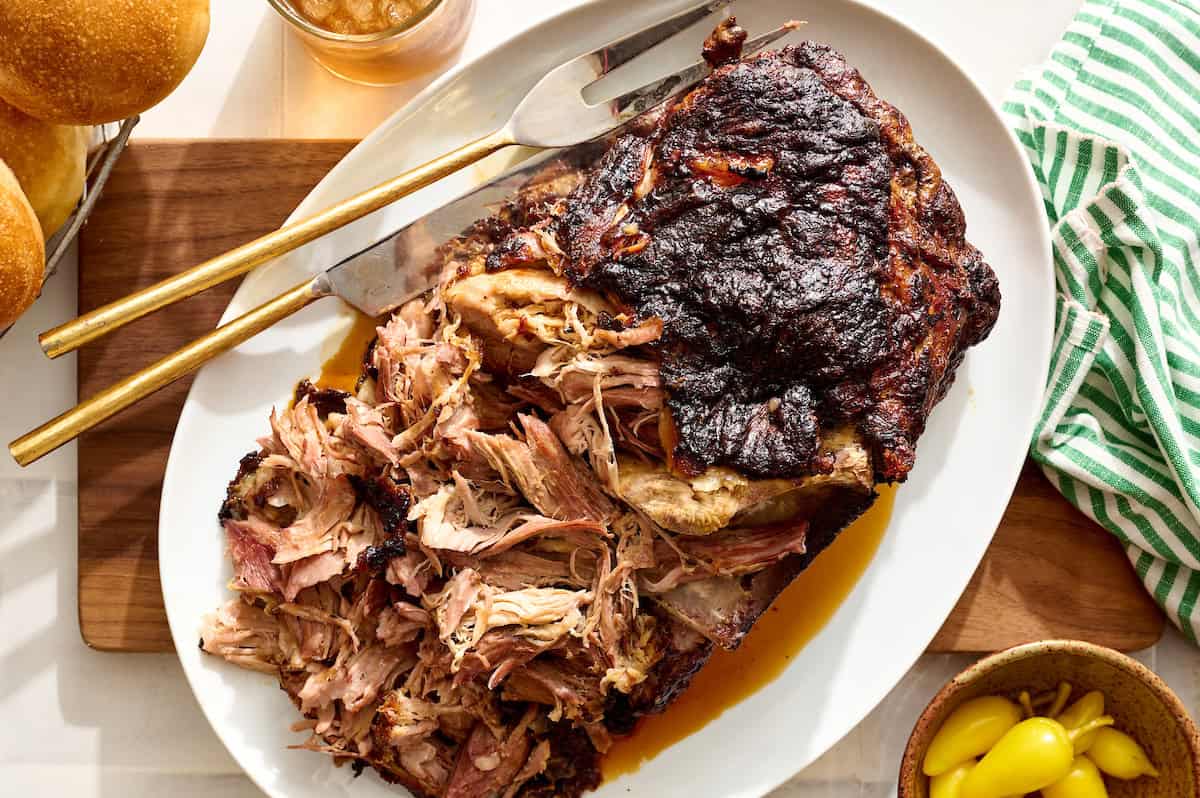
Once the roast has rested, shred it right in the pan with two forks or a pair of meat claws. I work my way through the whole roast, chopping up the bigger pieces as I go. The fat cap and darker bits on top get a closer look. I pull off some of the heavier fat, but the deeply seasoned crust pieces get chopped up and mixed back in. That's where a lot of the flavor lives.
Once it's all shredded, take a measuring cup or ladle and spoon the rendered pan juices all over the meat. Don't be shy with it. The juices are what make this roast taste like it came out of a restaurant kitchen.
A note on probe thermometers
A probe thermometer is the single most useful tool for this recipe. The kind with a wire that runs from the oven to a digital readout on your counter. You set the target temperature, slide the probe into the thickest part of the roast (avoiding the bone), and the alarm goes off when you hit 200°F. No need for opening the oven every 30 minutes to check.
I use the same one I use for sourdough and other bread baking. If you only have an instant-read thermometer, that works too. Just check starting around hour four and again every 30 minutes after that.
Troubleshooting Guide
The crust is darkening too fast. Some ovens run hot, and an 8-pound roast spends a long time exposed to dry heat. If the top is getting too dark before you hit your target internal temp, tent the roast loosely with foil and finish the cook covered. The crust will hold what it has and the inside will keep cooking.
You bought pork loin by mistake. This is a common one. Pork loin and pork shoulder look similar at the meat counter and the names blur together. Pork loin should never go past 145°F internal or it gets dry and chalky. If you've already started this recipe with a loin, pull it at 145°F and slice thinly. The marinade will still be delicious, but you won't get the fall-apart texture this method is built for.
The meat is tough when you go to shred it. You pulled it too early. There's nothing to do once it's out, but next time, trust the 200°F number. If the roast is still warm, you can sometimes save it by returning it to a 250°F oven for another 30 to 45 minutes. The collagen still has a chance to break down.
Joanie's Balanced Bites
This recipe is a solid base for stable blood sugar because it's mostly protein and fat. The maple in the rub is spread across 8 pounds of meat, so per serving it's barely anything.
Being primarily protein, we've got lots of options for adding fiber and carbs to the plate. Last night I served it as grain bowls with greens, the Pesto Buttermilk dressing from the Cowboy Ciao salad, tomatoes, cooked rye berries, pickled red onions, and corn. I've also served it on my Sourdough Buns as pulled pork sandwiches with BBQ sauce and slaw on the side. And taco night with warm tortillas, pickled onions, and a squeeze of lime is one of our favorites.
More ➡️ blood sugar friendly recipes
How to Store and Use Leftovers
Leftovers keep for 4 days in the fridge or up to 3 months in the freezer. I shred mine before freezing so it goes straight into whatever I'm making.
When reheating, always add a splash of water or broth to keep it from drying out. Warm shredded pork in a covered skillet over medium-low heat. Or warm it up in the oven in a baking dish at 300°F for 15 minutes.

Slow Roasted Pork Shoulder Roast
- Prep Time: 2 hours
- Cook Time: 6 hours
- Total Time: 8 hours
- Yield: 14 servings
- Category: Dinner
- Method: Roasting
- Cuisine: American
- Diet: High-Protein
Description
A dijon-garlic pork shoulder roast that turns out fall-apart tender every time. Works with bone-in or boneless cuts.
Ingredients
- 1 (8-pound / 3.6 kg) bone-in pork shoulder (Boston butt)
- 3 tablespoons dijon mustard
- ¼ cup (60 ml) olive oil
- 4 cloves garlic, minced
- 1 tablespoon (15 ml) pure maple syrup or honey
- 2 teaspoons kosher salt
- ½ teaspoon black pepper
Instructions
- In a small bowl, whisk together the dijon, olive oil, garlic, maple syrup, salt, and pepper until combined.
- Pat the pork shoulder dry. Massage the rub all over the roast, working it into every surface.
- Cover and refrigerate for at least 2 hours, or up to 24 hours.
- Pull the roast out of the fridge 30 minutes before cooking. Preheat oven to 450°F (230°C).
- Place the roast directly in a foil-lined pan, fat cap up. Roast uncovered at 450°F for 30 minutes.
- Reduce the oven temperature to 250°F (120°C). Continue roasting until a probe thermometer inserted into the thickest part of the roast (avoiding the bone) reads 200°F (93°C). For an 8-pound bone-in roast, this takes 6 to 7 hours total.
- Transfer the roast to a cutting board, tent loosely with foil, and rest for at least 20 minutes. Shred with two forks, removing some of the heavier fat from the top, and spoon the pan juices over the shredded meat before serving.
Nutrition
- Serving Size: 4.6oz serving
- Calories: 253
- Sugar: 0.9 g
- Sodium: 369 mg
- Fat: 14.1 g
- Carbohydrates: 1.3 g
- Fiber: 0 g
- Protein: 27.8 g
- Cholesterol: 95.1 mg